France
-
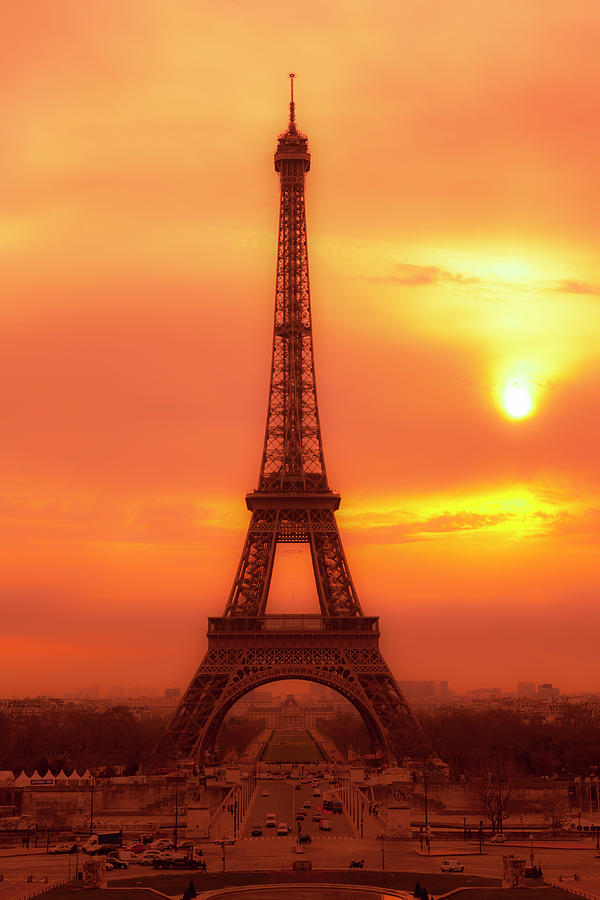
Eiffel Tower
History and Construction
The Eiffel Tower was designed by the French engineer Gustave Eiffel. Construction began in January 1887 and was completed in March 1889. It was built as the entrance arch for the 1889 Exposition Universelle (World's Fair) held to commemorate the 100th anniversary of the French Revolution.
Standing at 324 meters (1,063 feet) tall, it was the world's tallest man-made structure until the completion of the Chrysler Building in New York in 1930. The tower is made of wrought iron and consists of over 18,000 individual parts held together by 2.5 million rivets.
Significance
The Eiffel Tower is a global cultural icon of France and one of the most recognizable structures in the world. It attracts millions of visitors each year, making it one of the most visited monuments that require an entrance fee.
Louvre Museum
History and Construction
The Louvre Museum, originally a royal palace, is now the world's largest art museum. It is located on the Right Bank of the Seine in Paris and is a historic monument in France.
Significance
The Louvre is home to thousands of works of art, including the Mona Lisa and the Venus de Milo. It is one of the most visited museums in the world.
Italy
-
Colosseum
History and Construction
The Colosseum is an ancient amphitheater in Rome, commissioned in AD 72 by Emperor Vespasian. It was completed in AD 80 by his son Titus, and further modifications were made during the reign of Domitian (AD 81–96).
Significance
The Colosseum could hold up to 80,000 spectators and was used for gladiatorial contests and public spectacles such as mock sea battles, animal hunts, executions, and dramas.

Leaning Tower of Pisa
History and Construction
The Leaning Tower of Pisa is the freestanding bell tower of the cathedral of the Italian city of Pisa, known for its unintended tilt. The tower began to lean during construction in the 12th century due to soft ground on one side.
Significance
The Leaning Tower is one of the most recognizable structures in the world and is part of the Piazza dei Miracoli, a UNESCO World Heritage Site.
Germany
-
Brandenburg Gate
History and Construction
The Brandenburg Gate is an 18th-century neoclassical monument in Berlin, built on the orders of Prussian king Frederick William II after the temporary restoration of order during the Batavian Revolution.
Significance
The Brandenburg Gate has been a symbol of both division and unity. During the Cold War, it was situated in the no-man's-land just behind the Berlin Wall, and hence, became a symbol of a divided Germany. After the fall of the Berlin Wall, it became a symbol of reunification.
-
Neuschwanstein Castle
History and Construction
Neuschwanstein Castle is a 19th-century Romanesque Revival palace on a rugged hill above the village of Hohenschwangau near Füssen in southwest Bavaria, Germany. The palace was commissioned by Ludwig II of Bavaria as a retreat and in honour of Richard Wagner.
Significance
Neuschwanstein Castle is often referred to as the fairy tale castle, thanks to its picturesque setting and whimsical architecture. It has inspired numerous adaptations in various forms of media, including Disney's Sleeping Beauty Castle.